Professional Liability Advocate

You Had Me at “I’m Sorry”: The Impact of Physicians’ Apologies on Medical Malpractice Litigation

Physicians typically recall, with stunning clarity, the moment a patient’s treatment went wrong.  Following an adverse event, physicians often are tormented by competing desires to apologize and instincts to forge ahead without acknowledgement. A patient’s decision to file a malpractice action may be triggered by the physician’s response to a problem − or lack thereof.

The Washington Post highlighted contrasting tales of medical errors in which two patients suffered devastating consequences during surgery. Frustrated by a “white wall of silence” preventing her health care providers from articulating more than “’things didn’t go well,’” the first patient desperately committed to finding truth at all costs. In stark contrast, following his surgeon’s immediate explanation and apology for an error that rendered the second patient quadriplegic, the patient engaged in productive discussions with risk managers. The patient’s needs were met and his attorneys negotiated a confidential settlement without litigation.

Read More

Ding Dong the Arbitration Ban Is Dead!


I vividly recall attending the Bronx Bar Association Dinner last fall when it was announced that the Centers for Medicare & Medicaid Services (CMS) would ban pre-dispute arbitration provisions in nursing home admission agreements as of November 28, 2016. This news was relayed to me by a Bronx Supreme Court judge who had denied my very first motion to compel arbitration under such a provision. That denial ultimately was reversed on appeal.

Read More

Deloitte’s $500 Million Sentence

We have assisted many accounting firms in the creation or revision of their client engagement letters. They very often question the need to include certain provisions intended to limit their liability to their clients and sometimes ask whether the provision is even enforceable. Whether the provision will be enforced is uncertain due to the very limited case law addressing liability-limiting provisions in accountants’ client engagement letters, and there could be variations in enforcement from state to state. Nevertheless, we regularly advise our clients to include the provisions, even if enforcement is uncertain, because the provision might just be accepted and never challenged, thereby serving its purpose, even if a court strikes it down after a legal challenge.

Read More

What Attorneys Can Learn from History’s Largest Data Breach

468453132On April 3, 2016, the public learned that millions of client documents from the Panamanian law firm and corporate services provider Mossack Fonseca & Co. (MF) had made their way to an international organization, the International Consortium of Investigative Journalists (ICIJ), and that the information would be used to publish potentially damaging stories. In addition, authorities across the globe, from Japan to Switzerland to the United States, are reviewing the documents and investigating potential tax implications, regulatory violations and criminal activity.

Read More

Negative Online Reviews: The Best Defense

WebA recent Washington Post article examined the issue of patient privacy complaints after medical providers responded to negative Yelp® reviews about medical care. The issue of how a professional can (or should) respond to negative online reviews is not limited to physicians or medical facilities. While attorneys are not subject to HIPAA, they are all well aware that attorney-client communications are privileged and confidential and only the client can waive that privilege.

Read More

When Less Is More: The pitfalls of saying too much in professional contracts

designprofessionalsDesign and other professionals often incorporate their practices in an effort to avoid individual liability. They also add well-crafted limitations of liability and indemnification clauses in their form services contracts to avoid responsibility for problems that arise in the execution of the plans. These strategies are especially important for practitioners in jurisdictions where a design professional may be exposed to liability disproportionate to the limited scope of services, such as where codefendants have no insurance coverage or are underinsured. It is also common for plaintiffs to sue the professional individually to attempt to circumvent favorable clauses in the professional corporation’s standard contract for services.

Read More

CPAs Need to Sharpen Awareness of IT Threats

Magnifying glass keyboard_TS_147860345In the most recent “North America Top Technology Initiatives Survey Results,” CPAs responding to the poll ranked “securing the IT environment” as the number-one priority, followed by “managing and retaining data,” “ensuring privacy,” “managing IT risks and compliance,” and “preventing and responding to computer fraud.” The top five poll results all relate to securing, managing or protecting the information entrusted to CPAs. The poll results are largely consistent with prior years and not particularly surprising in a world where data breaches routinely make national headlines, and CPAs receive and store large amounts of highly personal and confidential data. What is surprising and potentially alarming is the seemingly low levels of confidence the poll respondents had in their ability to protect data.

Read More

3D Printing in Medicine – Now?

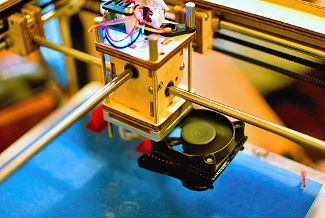
3D printing head

Advances in medical technology have made it possible to interpret x-rays from half way around the world, perform surgery through robots and diagnose dermatological conditions via Skype. Today we are on the cusp of further developments that will allow medical technicians to use 3D printers to generate medical devices, prosthetic limbs, and body parts and organs. While the technology is moving forward rapidly, the societal, ethical and legal debates are only beginning and will need to catch up quickly.

Additives manufacturing or process, a.k.a. 3D printing, provides a method for an object designed on a computer to be “printed” in plastic in a three-dimensional form. I read about this technology in a New York Times story about a new way to manufacture guns to get them past airport security. While this concept is certainly scary, there are obvious potential benefits from this technology in many fields, including the possibility of one of the greatest impacts on the medical community in history.


Read More

It Takes One to Confront One in a Professional Liability Claim

163170179Would an architect by any other name smell as sweet? The answer is no when it comes to authoring an affidavit of merit in New Jersey. A recent case made clear that an affidavit from a professional licensed in a different field cannot support a professional liability claim, even if they have sufficient expertise in a related or overlapping area of expertise germane to the issue presented.

The New Jersey Legislature enacted the Affidavit of Merit Statute in 1995 to quell spurious litigation against licensed professionals. While the statute may have since achieved some of the desired effect, lawyers have been fighting over the statute’s reach and application since its enactment. Though the legislature probably never intended for the statute to become a subject of protracted litigation, there is a tangled nest of appellate opinions interpreting the statute from nearly every angle. That new law continues to be made, despite the language of the statute remaining essentially unchanged, shows that the statute still – almost 20 years later – breeds litigation uncertainty in very practical and impactful ways.

Read More